Do You Need to Wear SPF in Autumn and Winter? Why Your Skin Still Needs Sun Protection
SPF in autumn and winter might not be the first thing you think about when the temperature drops, the evenings get darker and summer feels like a distant memory. But just because the sunshine has disappeared from your daily routine doesn’t mean your skin no longer needs protection.
Have you ever looked outside on a cold, grey November morning and thought, Surely I don’t need SPF today?
You’re not alone. When summer sunshine disappears, sun protection is often the first thing to disappear from our skincare routines, too. We swap lightweight moisturisers for richer creams, reach for our favourite winter skincare products and forget about sunscreen until the warmer weather returns.
But here’s the thing: the sun doesn’t have to feel hot to affect your skin.
Ultraviolet (UV) radiation can still reach your skin during autumn and winter, including on many cloudy days. UVA rays, in particular, are present throughout the year and contribute to premature skin ageing.
At Ultimate Skin, we believe great skin is about more than what you do in the treatment room. It’s also about the little things you do every day to protect, nourish and care for your skin.
So, do you need to wear SPF in autumn and winter? Is it really worth applying sunscreen when the sun barely makes an appearance? And what makes Environ’s approach to sun care different?
Let’s talk about it.
Do You Need to Wear SPF in Autumn and Winter?
The short answer is that SPF can still be important in autumn and winter, even when the weather feels cold.
The amount of UV radiation reaching your skin changes throughout the year. In the UK, UV levels are generally strongest during spring and summer and tend to be lower during the autumn and winter months.
However, UV exposure doesn’t automatically stop when summer ends.
UVA rays are present throughout the year and can penetrate clouds and glass to varying degrees. They are particularly relevant to skin ageing because they contribute to the breakdown of collagen and elastin over time.
UVB rays, which are primarily responsible for sunburn, are generally less intense during the colder months in the UK, but exposure can still occur, particularly on brighter days or when spending time outdoors.
This is why it’s worth thinking about your SPF routine beyond the summer holidays.
Rather than relying on the temperature or how bright the sky looks, check the UV index. When it reaches 3 or above, sun protection is recommended.
If you’re spending extended periods outdoors, enjoying winter walks, skiing or travelling somewhere sunnier, protecting your skin becomes especially important.
The message isn’t that every winter day presents the same UV risk as a summer afternoon. It’s that the weather alone isn’t a reliable way to judge your exposure.
Why Your Skin Still Needs Sun Protection After Summer
Sun protection isn’t just about avoiding sunburn. It’s an important part of maintaining healthy-looking skin and protecting the results of your skincare routine.
Here are four reasons why autumn and winter SPF deserves a place in your skincare routine.
1. UVA Rays Can Contribute to Premature Skin Ageing
UVA rays penetrate more deeply into the skin than UVB rays. Over time, exposure contributes to the breakdown of collagen and elastin, the proteins that help keep skin looking firm and supple.
This process is known as photoageing.
Photoageing can contribute to:
- Fine lines and wrinkles.
- Loss of skin elasticity.
- Uneven skin tone.
- The appearance of pigmentation and dark spots.
- A duller, less even-looking complexion.
Of course, skin ageing is completely natural, and SPF won’t stop the clock. But protecting your skin from UV exposure is one of the most effective ways to help minimise avoidable sun-related skin damage.
If you’re investing in professional facials, active skincare ingredients and a good homecare routine, daily sun protection helps support those efforts.
Think of SPF as an important part of your long-term skin maintenance routine, rather than something you only reach for when you’re heading to the beach.
2. Autumn and Winter Can Still Bring Unexpected UV Exposure
Think about how much time you spend outside during the colder months.
Walking the dog, driving to work, enjoying a countryside walk or sitting beside a window can all contribute to your overall UV exposure.
And what about those unexpectedly sunny autumn afternoons?
You might not feel the warmth of the sun, but that doesn’t mean there is no UV radiation.
Snow can also reflect UV rays, increasing exposure during winter sports and mountain holidays.
The important thing is not to assume that cold weather automatically means your skin is protected.
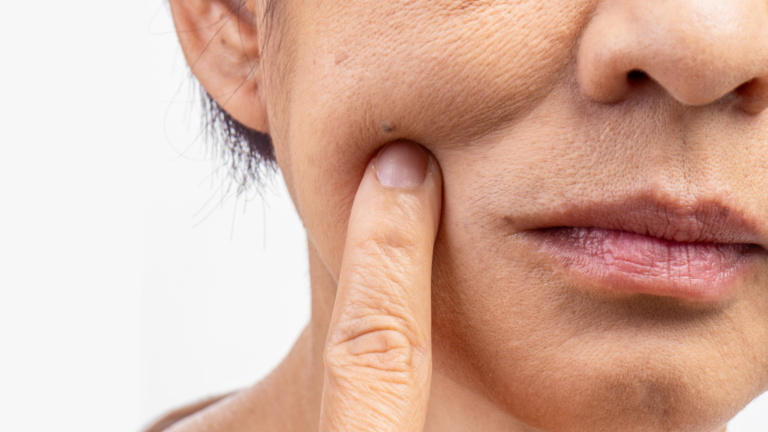
3. Pigmentation Can Become More Noticeable Over Time
If you’re concerned about uneven skin tone, dark spots or pigmentation, sun protection should be an important part of your skincare routine.
UV exposure can contribute to the development and darkening of pigmentation, including sun spots.
Even if you’re using skincare products designed to improve the appearance of uneven skin tone, protecting your skin from further UV exposure is essential.
A consistent approach to sun protection can help support your skin alongside a well-chosen skincare routine.
4. Your Skincare Routine Deserves Consistency
It’s easy to focus on skincare when the weather changes, but the best routines are often the ones you can maintain throughout the year.
Cleansing, moisturising, using products suited to your skin and taking sensible sun protection measures all work together.
At Ultimate Skin, we believe respecting the skin means understanding what it needs in different seasons, rather than completely changing your approach every few months.
Autumn and winter are a good opportunity to review your routine, particularly if your skin feels drier, more sensitive or less comfortable in colder weather.
Does Cloudy Weather Mean You Can Skip SPF?
This is one of the biggest skincare misconceptions.
A cloudy sky doesn’t necessarily mean your skin is protected from UV radiation. Some UV rays can pass through cloud cover, and exposure varies depending on the weather conditions and time of year.
Of course, a dark, overcast winter day in the UK may have a much lower UV index than a bright summer afternoon.
That’s why checking the UV index is more helpful than judging the weather by how sunny or warm it feels.
If you’re spending most of your day indoors, the UV exposure you receive will also depend on your surroundings, including whether you’re sitting near windows.
For everyday skincare, the aim is to build a sensible, consistent routine that reflects your lifestyle and the UV conditions.
Environ’s Unique Approach to Sun Protection: LESS. MORE. MORE OFTEN.
At Ultimate Skin, we love Environ’s considered approach to skincare, and its sun care philosophy is no exception.
Environ takes a distinctive approach to sun care, combining UV filters with antioxidants to help defend the skin against environmental damage.
Its philosophy is easy to remember:
LESS. MORE. MORE OFTEN.
Let’s look at what this means.
LESS – A considered approach to sun filters
Environ’s philosophy focuses on lower SPF formulations, typically SPF 15–20, alongside antioxidants.
The idea is to use a considered level of UV filtering protection while incorporating additional antioxidant support.
Environ’s approach is not simply about choosing the lowest SPF possible. It’s about combining appropriate sun protection with a broader skincare strategy.
It’s important to remember that SPF measures protection against UVB radiation, and a lower SPF does not automatically mean a sunscreen is better or more suitable for every situation.
For example, SPF 15 filters approximately 93% of UVB radiation, while SPF 20 filters approximately 95%, under standardised testing conditions.
These figures describe the proportion of UVB radiation filtered under test conditions. They do not represent protection against all UV-related skin damage, nor do they mean that you can stay in the sun indefinitely.
A product’s UVA protection is also important, particularly when you’re thinking about photoageing and long-term skin health.
MORE – Antioxidants for additional skin support
Sun protection isn’t just about UV filters.
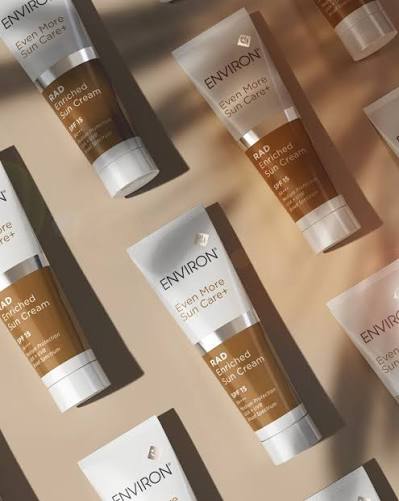
Environ also incorporates antioxidants, including vitamins C and E and beta-carotene in RAD Activé Antioxidant Sun Cream SPF 20.
Antioxidants help neutralise free radicals, unstable molecules that can be generated by exposure to UVA and UVB radiation, as well as other environmental stressors.
This provides additional skincare support alongside sunscreen filters.
Environ’s RAD Activé Antioxidant Sun Cream SPF 20 combines physical and chemical filters with an antioxidant complex to help protect the skin from environmental oxidative stress.
It’s an approach that reflects the idea of looking after the skin with a combination of protection and skincare support.
MORE OFTEN – Consistency matters
Applying sunscreen correctly and reapplying it as directed are essential parts of an effective sun protection routine.
Environ’s philosophy highlights the importance of making sun care a regular habit rather than using it only on sunny days or during summer holidays.
At Ultimate Skin, we believe understanding your skin and choosing products that suit your individual needs are key to a consistent skincare routine.
A sunscreen you enjoy using and can comfortably incorporate into your morning routine is much more likely to become a habit.
Environ RAD Activé Antioxidant Sun Cream SPF 20 at Ultimate Skin
One of the Environ sun protection products we offer at Ultimate Skin is Environ RAD Activé Antioxidant Sun Cream SPF 20.
This lightweight, antioxidant-rich sun cream combines physical and chemical UV filters to provide broad-spectrum UVA and UVB protection, alongside vitamins C and E and beta-carotene.
It’s designed to offer everyday sun protection while helping defend the skin against free-radical damage caused by environmental stressors.
What makes Environ RAD Activé SPF 20 different?
Antioxidant support
The antioxidant complex features vitamins C and E and beta-carotene.
Antioxidants help neutralise free radicals, which can be generated by UV exposure and other environmental stressors.
This is an important part of Environ’s approach to supporting skin health alongside sun protection.
Lightweight, breathable texture
RAD Activé has a lightweight, creamy texture designed to spread evenly and feel comfortable on the skin.
It is sweat-resistant and designed not to migrate easily, making it a convenient option for everyday use and active lifestyles.
A sunscreen that feels pleasant to apply is often easier to incorporate into your morning skincare routine, especially when you’re wearing makeup.
Broad-spectrum UVA and UVB protection
RAD Activé combines physical and chemical filters to provide protection against UVA and UVB radiation.
Its SPF 20 rating indicates its level of UVB protection, while its broad-spectrum formulation also provides UVA protection.
.At Ultimate Skin, we can help you consider which Environ sun protection product best suits your skin and lifestyle.
Is SPF 20 Enough for Autumn and Winter?
This is an important question, particularly if you’re considering Environ RAD Activé Antioxidant Sun Cream SPF 20.
The answer depends on the UV conditions, how much time you spend outside and your individual circumstances.
SPF 20 provides meaningful UVB protection when applied correctly. However, it offers less UVB protection than SPF 30 or SPF 50, and it is not automatically the best choice for every day or every skin type.
In the UK, sun protection is generally recommended when the UV index reaches 3 or above. For those conditions, public health guidance generally recommends at least SPF 30 alongside good UVA protection.
If you’re spending extended periods outdoors, have a history of sunburn or need additional protection, a higher SPF may be more appropriate.
The most important thing is to choose a product that provides suitable protection for your circumstances, apply enough of it and reapply as directed.
At Ultimate Skin, we can help you understand Environ’s sun care approach and consider whether RAD Activé SPF 20 is appropriate for your skincare routine.
How to Apply SPF Correctly in Autumn and Winter
Even the best sunscreen won’t offer its intended protection if you don’t apply it properly.
Here are a few simple ways to make SPF part of your everyday skincare routine.
Apply SPF as the final step in your morning skincare routine
After cleansing and applying your usual moisturiser, apply your sunscreen before makeup.
Give the product time to settle before applying foundation or other makeup.
Don’t forget your neck and décolletage
Your face isn’t the only area exposed to UV radiation.
Remember your neck, ears, the backs of your hands and any other exposed skin.
These areas can show signs of sun-related ageing over time, particularly if they’re regularly overlooked.
Apply enough product
One of the most common SPF mistakes is applying too little.
Use the amount recommended by the manufacturer to achieve the stated protection. A thin layer of sunscreen may provide considerably less protection than the SPF number on the packaging suggests.
Reapply when necessary
If you’re spending extended periods outdoors, follow the product’s instructions for reapplication, generally at least every two hours.
Reapply after swimming, sweating or towel-drying when applicable.
And remember, sunscreen isn’t a substitute for other sun protection measures. When UV levels are high, seek shade, cover up and wear a suitable hat and sunglasses.
Should You Wear SPF Every Day in Winter?
This depends on the UV conditions, your lifestyle and how much time you spend outdoors.
In the UK, UV levels are usually lower during the depths of winter than they are in spring and summer.
On days when the UV index is below 3, the need for sun protection is generally lower for most people. However, there are exceptions, such as snow reflection, prolonged outdoor exposure and travel to destinations with stronger sunshine.
If you enjoy a daily SPF routine throughout the year, that’s a perfectly reasonable approach, especially if it helps you maintain a consistent skincare habit.
The key is to choose a sunscreen that suits your skin and offers the appropriate level of protection for the conditions.
Why Choose Ultimate Skin for Your Environ Skincare?
At Ultimate Skin, we believe beautiful skin starts with understanding your skin.
Our approach is focused on respecting the skin, supporting its natural function and choosing skincare that works alongside your individual needs.
Environ is an important part of our skincare offering because it combines a vitamin-focused approach with professional skincare products designed to support the skin.
Whether you’re looking to improve the appearance of fine lines, uneven skin tone or simply maintain a healthy-looking complexion, we can help you build a skincare routine that includes appropriate sun protection.
We can also help you explore which Environ products may be suitable for your skin, including RAD Activé Antioxidant Sun Cream SPF 20.
If you’re unsure whether SPF 20 is the right choice for your everyday routine, we’re happy to help you consider your skin type, lifestyle and sun exposure.
Frequently Asked Questions About SPF in Autumn and Winter
Do you need to wear SPF in autumn and winter in the UK?
SPF can still be important during autumn and winter, particularly when the UV index reaches 3 or above. UV levels are usually lower during the colder months, but UVA rays are present throughout the year.
Can you get sun damage on a cloudy day?
Yes. Some UV radiation can pass through cloud cover. The level of exposure depends on the UV index, weather conditions and how much time you spend outdoors.
Is Environ RAD Activé SPF 20 suitable for winter?
Environ RAD Activé Antioxidant Sun Cream SPF 20 provides UVA and UVB protection alongside antioxidants. Whether SPF 20 is appropriate depends on your UV exposure and lifestyle.
Does SPF prevent premature skin ageing?
Sunscreen helps protect the skin against UV radiation, which contributes to photoageing. Using appropriate sun protection regularly can help minimise avoidable sun-related skin damage over time.
Should I apply SPF if I’m staying indoors?
Your need for sun protection depends on your surroundings and UV exposure. If you’re near windows, spending time outdoors or experiencing higher UV levels, sun protection may still be appropriate. Check the UV index and consider your individual circumstances.
What Is the Difference Between SPF 20 and SPF 50?
The difference between SPF levels can be surprising. SPF measures protection against UVB radiation, rather than the percentage of protection the number itself suggests. Under standardised testing conditions, SPF 20 filters approximately 95% of UVB rays, SPF 30 filters around 97%, and SPF 50 filters approximately 98%. This means SPF 20 allows around 5% of UVB radiation through, compared with approximately 2% for SPF 50. Although the difference in the percentage filtered may appear small, SPF 50 allows around 60% less UVB radiation through than SPF 20.
Environ’s approach to sun care combines UV filters with antioxidants, such as vitamins C and E and beta-carotene, to help defend the skin against environmental stress and free-radical damage. Its philosophy focuses on a considered level of sun protection alongside additional antioxidant support.
The Ultimate Skin Takeaway: Summer Isn’t the Only Time Your Skin Needs SPF
So, do you need to wear SPF in autumn and winter?
The answer is that sun protection is still worth thinking about long after summer ends.
UVA rays can contribute to premature skin ageing, and UV exposure can occur even when the weather feels cold or cloudy.
Checking the UV index, choosing appropriate sun protection and applying it correctly are all simple ways to support your skin throughout the year.
And if you’re looking for an antioxidant sun cream to incorporate into your skincare routine, Environ RAD Activé Antioxidant Sun Cream SPF 20 is available at Ultimate Skin.
Because taking care of your skin shouldn’t be a summer-only commitment.
Summer may be over, but your skincare routine doesn’t have to stop protecting your skin.
For advice on Environ sun protection and choosing the right SPF for your skin, contact Ultimate Skin and let us help you find a routine that works for you.